The rebirth of cool; Cinelli
Cinelli is one of the iconic brands in cycling, around since the late 40’s in one capacity or another. Cinelli is responsible for lasting designs and innovations that will be part of cycling’s history and heritage into the next millennia and beyond. The incredible history of the brand is something any company would like to have.
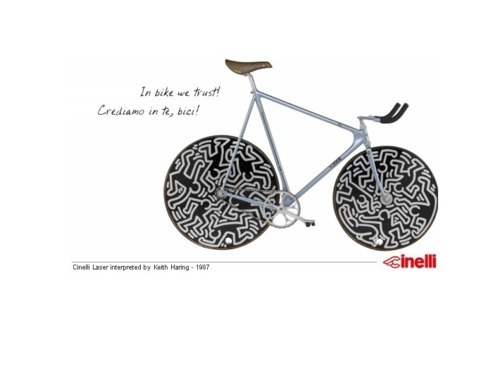
It is not to say that Cinelli has not had its problems and defeats, as well as all those victories. There have been many setbacks along the way, but Cinelli has managed to always smartly find a way to climb back from the abyss and reestablish itself as a brand to be reckoned with.
Cinelli had fallen on some pretty rough times in the 90’s, but then they introduced a very innovative handlebar extension called Spinaci. These clever extensions became exceptionally popular with racers around the globe and at the highest levels of the sport. Sadly, the international governing body of cycling- the UCI- decided they were unsafe and banned them from competition in mass start events. This meant the death of Spinaci and the countless copycat products they’d spawned. This also threw Cinelli back into some rough waters.
The brand never went away and was never all that close to vanishing, but the image had been dented again and the name was fading from the hierarchy of brands at the top of the sport- despite the best efforts of the products and the engineers and designers at Cinelli.
Ultimately, what saved the brand and has kept it alive to this day, is the brand’s great eye for Italian design. Cinelli has always had a strong reputation for iconic modern Italian design. From the famous winged “C” logo, to the hallmark use of color and an eye for spotting trends. This all lead to Cinelli constantly maintaining a cult following of rabid fans willing to look past mistakes or missteps, eagerly awaiting the next design- whether with glee or morbid curiosity.
It’s the eye for design and ability to remain “current” with fashionable trends that gave the fans something to love. And those fans have spanned multiple generations. The young fans of today are largely in love with the deigns of the past- and Cinelli has been smart enough to give them what they want. Cinelli has remained relevant by listening to their fans and allowing them to dictate where the brand is going… or returning to.
The strength of Cinelli today lies in the fact that the brand has been co-opted by the fixed gear/ urban cycling culture. Most of the fans of Cinelli now only know of the brand’s vintage appeal from the aesthetic, as opposed to the long history of race wins and product innovation. They’re drawn more to the cool factor than anything else… and Cinelli has no problem with that at all. Which is a stroke of pure genius.
In this incredibly cutthroat market for bikes and parts, Cinelli has been able to rise above the fray and retain it’s sense of style and elegance. The Cinelli of today looks a lot like the Cinelli of decades prior because that is what the consumers of today have been begging for. From aligning themselves with arguably the strongest name in the fixed gear subculture- MASH SF- to reissuing the products that originally built the Cinelli name, they have placed themselves in the center of a very visible and vocal segment of the cycling world.
Cinelli stands out as a brand that understands who they are, who they aren’t and who their true customers are and what they want. Unlike many brands who tell their customers what they want- or should want- Cinelli listens and gives their customers what they have asked for. It sounds stupidly easy to do, yet too few companies even bother to try; the idea of letting go of control is too frightening. It isn’t to say that Cinelli simply spits out product by request- they still design avant-garde products that push the edge of being a freak show highlight. It’s this blend of innovation and retro reproduction that keeps Cinelli alive today…
… and is likely to keep them alive tomorrow too.
Website
Catalog
US website
Tim Jackson
Chief Kool-Aid Dispenser
Labels: Branding, Cinelli, Listening to customers, Marketing Success Story, Rebirth
Posted by Tim Jackson at 10:19 PM


Kool-Aid is coming back... sorta...
Hello... is this thing on?
It's been since October of 2009 since this blog has been updated. Lots of changes have taken place in that time- obviously- and lots of great discussions have been missed. It's been a long time since I last put out a call for guest writers to help keep this thing afloat- and I got a lot of great volunteers... in 2009!
So, with that said, consider this a repeat;
- I am officially looking for guest writers to help bring this blog back from the dead... again.
- Here's the original Kasting Kall.
To all those who tossed their hat into the ring the last time, please feel free to toss it in again! To those who thought about it before, but held back... here's your chance. AND... for those who are seeing this for the first time, I promise I'm a nice guy and won't be mean as Editor... so send me a sample.
Thank you again (again),
Tim Jackson
Chief Kool-Aid Dispenser
Labels: Back from the dead, Contributor Casting Call, Hello, We're not dead
Posted by Tim Jackson at 9:58 PM
Kool-Aid Kall
To all who have sent in writing samples and emailed an interest in joining the Kool-Aid Krew, I just want to say thank you and let you know you will be hearing from me soon- I promise. Frankly, I'm tempted to take all of you on as contributors... and just might! I'm one nutty editor/ Chief Kool-Aid Dispenser.
If you haven't already heard from me, you will soon, so please be patient... I
do have a day job after all...
I'm very excited about the changes and upgrades coming to this site and I thank you for your patience and continuing support.
Tim Jackson
Chief Kool-Aid Dispenser
Labels: Kool-Aid Krew, Now Hiring, Thank You
Posted by Tim Jackson at 8:19 PM
Become a member of the Kool-Aid Krew!
Since November 20, 2005 this blog has been a stop and go project limited mostly by the lack of free time each of the various contributors has available... or in most cases, doesn't have available. Somehow, despite this very sporadic and inconsistent history of posting, the blog continues to hold a readership and I still get frequent questions about when we're going to be updating the blog again. Believe me, that's a far greater compliment to me than you know.
From the beginning, the idea of this blog was to create dialog; a dialog between members of the cycling industry, retailers and consumers. The original focus was to cover marketing in the cycling industry and other industries that choose to use cycling to communicate their messages. Over time the focus changed a little and began to cover other cycling related news- with an intended focus being on how that news impacted the industry. I believe it is safe to say that we've covered quite a few different topics over the nearly four years we've been here and it's safe to assume that the focus will remain fairly diverse.
Since each of the contributors listed on the right side of this page have very diverse viewpoints, it is clear that things will remain pretty diversely covered within the posts here. And here's where you potentially come in...
We're looking for new contributors for the blog. Want to join us? Then send a writing sample (or link to your existing blog, etc) and a brief bio to me at
timothyvjackson (at) gmail (dot) com. You don't need to be in the bicycle industry to qualify, since we are looking to keep things diverse around here- varying viewpoints are very much desired. One thing that is required though... a thick skin and a good sense of humor. We don't want or allow sniper attacks on brands or people, so if you have an axe to grind you'll need to grind it elsewhere. We also don't allow sexism, racism, bigotry or political/ religious firebombing. In essence, we're here to be informative, invite discussion that has the potential to move a topic towards change and overall shed light on important topics that tie to the life and health of the cycling world and industry... even if it takes a little searching to find that connection from time to time.
So if you've got a burning desire to become a member of the Kool-Aid Krew, drop me a line and let me know. The goal is to have a large enough team of contributors to ensure that the site is updated at least once a week so that the burden does not fall onto any one person's shoulders. If you're a little shy about becoming a regular contributor, listed on the site, feel free to submit a post as a guest contributor as well.
Thanks again to all of the folks who have supported and encouraged this sporadic endeavor. We hope to make things a little more exciting around here in the coming months... including a change in the looks of things. Please excuse our e-dust as we do a bit of housecleaning... it will hopefully prove worth the patience.
Tim Jackson
Chief Kool-Aid Dispenser
Labels: Contributor Casting Call, Now Hiring, We're not dead
Posted by Tim Jackson at 8:38 AM
Tradeshows and the cycling industry...
Over the past five weeks, I've attended three separate week-long (for me) tradeshows. Needless to say, I'm fairly worn down and really tired of the seemingly endless cycle of packing and unpacking and packing and unpacking, etc, etc... but that's not the point of this.
Over the past few years, the relationship between tradeshows and the industry has been evolving in many different directions. The effectiveness and cost worthiness of tradeshows has been under examination by nearly every person and brand within the cycling industry- from retailer to manufacturer/ distributor to OE supplier and international distributors. The entire cycling goods foodchain has been scrutinizing the changes in the way business is done these days and what the shows all mean or do.
Here's one bike nerds view from inside the equation...
Retailers; Retailers have really begun to trim back this year, here in the US, due to the weak economy. However, even before the economic downturn (also known as really terrible economic crash), retailers had been cutting back on their involvement with the main tradeshow-
Interbike. The Dirt Demo component of Interbike has continued to grow in popularity, as retailers can ride the bikes they are already buying, thinking of buying, wanting to evaluate or just so they can get some competitive comparison against the brands they already sell. By the time Interbike rolls around, the vast majority of retailers have already placed preseason orders with their main suppliers and if they sell Trek, Specialized, Giant and a few others, they've already been out of their shops for regional or private brand tradeshows. All of this leads to a further shrinking of the relevance of Interbike to many retailers and a growing "show fatigue" by the time Interbike rolls around sometime in late September. Unless a retailer is specifically looking to replace a bike brand with another bike brand, there is very little use for Interbike other than to shake hands with suppliers.
However, for smaller ticket items like clothing and other accessories, Interbike still holds some
limited power. But... in recent years very few retailers have gone to Interbike with the intention of "putting pen to paper" and placing orders. Again, with the strength of regional brand shows and the larger brands becoming increasingly large business partners for many retailers, Interbike's floor show is changing into much less of a tradeshow and much more of a social gathering. That said, Interbike has been savvy in beginning to address this and is looking to add more value for all who attend. The seminars held each year are growing in popularity and usefulness, as are things like the recently added
Urban Legend Fashion Show. To further cater to the evolving shape of the Interbike audience, there has been a growing acceptance of Social Media and the small but growing importance it now has in the cycling world- giving media credentials to bloggers, Tweeters, podcasters and the like is a big step. Having an impressive media center in the midst of the show floor is an even more impressive step.
Eurobike may not have the same level of non-traditional show gimmics, but the show does continue to evolve and was quicker to develop fashion shows for the cycling world (though admittedly mocked by many folks in the industry at first). Eurobike suffers a bit less from the massive drop-off in order writing, as many European retailers do still place orders during the show. More importantly, however, Eurobike has become more of a distributor show- especially since it is now often the first introduction of many new products- a roll once prized by Interbike. Thanks to this explosion of early product introductions, Eurobike also benefits from a growing presence from the media looking to wet the appetites of product crazy cycling enthusiasts around the globe.
Manufacturers; If you are a bike brand or a consumer product manufacturer and are trying to reach retailers, tradeshows are becoming harder and harder to justify. The cost of doing tradeshows is astronomical and prohibitive for smaller brands more likely to benefit the most from the extra exposure. Larger brands are shrinking their show presence, if not abandoning altogether, and are focusing the attention on regional private shows- you get the retailer all to yourself with nobody else getting in the way of your sales pitch. It's an intoxicating cocktail for many retailers when they get such special treatment too, so it is hard to find a reason NOT to do private shows.
For smaller brands who need the exposure, major shows eat up an entire year's budget and the stress can be nearly suicidal as well. Whether smaller bike brands or an accessory brand, the cost is high and the return is arguably low. But... can they risk not being there? Is being conspicuous in your absence something that will hurt you? Will your competition steal your customers if you aren't there? It's a big risk, as well as a big cost.
Most brands who have attended the ever-growing Dirt Demo are seeing that as becoming much more effective for them. In recent years, shows like Eurobike and the smaller Canadian show
BTAC/ Expo Cycle have added demo days to their shows to address this shift in tradeshow appeal. Again, here in the US, there are many brands who attend Dirt Demo only and skip the floor show, or only show up with a very tiny presence. Brands as important to the industry as Specialized and Trek have been a part of this shift. Will it hurt them for not having a full footprint inside the exhibit hall? Not likely- many of their retailers have already ponied up the dough at regional shows and they still get plenty of press attention by being at demo- if not more attention. Let's face it, a fleet of very expensive wonder bikes bombing down trails or blazing down the asphalt says a lot... real or not.
Interbike and Expo Cycle both have seen a major drop off in the amount of orders written or new business created. Eurobike has suffered less of a drop off, but still faces the same challenges. The question then becomes "why are we here" for many of the exhibitors at the shows. Well, that all depends on the brands you ask, but it is increasingly becoming about relationships. It's important to be at the show to thank customers for their business and try to convince them to keep growing their business with you... if they haven't already placed that big, mythical "preseason order" already. And most of them have. As an exhibitor for a smaller brand, Interbike still presents a chance and a hope that new business will come our way. We attend both Dirt Demo and Interbike with the hope of seeing existing customers and also seeing potential new ones.
Here's the thing though- as I pointed out in my opening comment, tradeshow burnout is becoming a very real thing. Eurobike was just August 31- September 1st for demo and September 2nd - 5th for the show, Expo Cycle was September 9th for demo and 10th - 12th for the show and Interbike was September 21st - 22nd demo and 23rd - 26th for the show... and I just got back from the second edition of Interbike's OutDoor Demo East in Providence, Rhode Island held October 8th - 11th. I didn't attend Eurobike, but I was at the other three of the four events. As a manufacturer, that's an astronomical financial commitment, not to mention the man hours that have to be used for so many events. At what point do manufacturers say "enough is enough"? For global brands, it's very difficult to do that. Granted, at Eurobike and Expo Cycle, my presence at the show is to be there to support the efforts of the distributors we have (or my parent company Haro Bicycles has). All of those shows add up quickly- especially when they are nearly back to back.
The addition of the OutDoor Demo East last year "seemed" like a good idea and the initial feedback, minus the grumblings of "not
another show", was that it was a success. This year's ODD-E was extended to four days, with the last two days being open to the public- something that much of the industry cringed over. How was the demo this year? Well... spotty at best. Day 1 was great because the weather was great. Day 2 had rain so very few retailers who attended actually rode any bikes in the cool and sloppy weather. Day 3 and 4 were open to the public... but there was also a two day stellar cyclo-cross event going on. And cross is huge in New England... with over 2000 racers signed up for the two days, it seemed like we'd all be busy... but the racers and the folks who came to watch and support them barely touched a demo bike over the two days. The racing was awesome and fun to watch, but that's the problem-
I had the time to watch the races because nobody was riding the demo bikes.
Nobody. Will we attend next year's event if it happens? Very hard to say right now. Lots and lots of evaluation is going into that question as we speak...
There are other smaller shows- mainly in Europe- but they play a much less significant role in the industry these days. These other shows were once important, but with the shift of dates and locations, they have fallen by the wayside a bit...
But, as another wrench in the works, there's the big industry show in Taipei Taiwan for all the OE suppliers, international distributors and bike manufacturers/ distributors. It's another layer of tradeshow commitment that can not be ignored. Which leads to the next tier...
OE Suppliers; OE Suppliers are the folks who make the stuff that has a different name on it. The biggest brands in the world nearly all work with a finite number of manufacturers in Taiwan and China and those brands, kept somewhat in the shadows and away from the consumers, attract their customers in Taipei... or did. The
Taipei Cycle show now suffers from a spot on the calendar- in mid March the past few years- that is becoming much less relevant to the bike spec'ing process. Many brands- including the one I am the Brand Manager for- complete and turn in their final spec to their factories at the end of December (if not possibly sooner). So by March now, many bike and accessory brands are in Taiwan to thank their vendors, meet with their International Distributors and then go visit their factories south in Taichung or over in China (mainly). For these OE Suppliers, the show is becoming hard to justify, as the spec process for that given year is already done and many production lines are already churning out the "new" products.
Here's where it gets complicated(er); there is now a growing series of mini-shows now mostly combined into one show in Taichung in December (5-13th) called
Taichung Bike Week and
Ride-On. The cool thing is that these two semi-competing shows have combined forces to actually altruistically serve the industry better. The December schedule allows product managers one final chance to see anything they need for their bike spec process. The informal format provides for private meetings away from the busier traffic of a full blown tradeshow and the costs are much lower. Plus, being in Taichung where much of the Taiwan bike industry resides, it is very easy to also do factory visits during the week. The growing strength of this new mini-show must be causing the Taipei show organizers to lose a lot of sleep.
On the other end of the Taipei show schedule is the
China Cycle show in Shanghai, April 27th - 30th. This show now has a place on the map and calendar of growing importance. The date provides an early glimpse into what will be happening in the next round of product spec and takes place in the world's largest manufacturing center. Chinese made cycling products have grown in popularity with many prestigious brands now having their products made in China and the strength of home brands like Giant and Merida only lends to that growth. Giant is the world's largest bicycle maker and Merida is their largest competitor. Giant is a popular global brand of its own and Merida enjoys some strength as a brand in Europe and a few other areas outside of the US.
The shift away from Taipei as a spec show is turning it into much more of a show for International Distributors as well as for companies sourcing private label suppliers. Taipei, like all the other established shows, is learning to cater to new customers as the market has evolved.
***
As you can see, it's a complicated picture out there. Retailers have less use for traditional shows, Manufacturers have less use for traditional shows and the OE Suppliers have less use for tradtional shows. Demo events are gaining strength and popularity, so many have suggested that the tradeshows be shortened and the demo days expanded. There are others who say the floor show is a dinosaur and is fading out of relevance. But that really only addresses the shows for retailers. What about the other shows? Taipei is really getting the squeeze on both ends of its calendar and the smaller shows are forcing them to really change how they do what they do and there is much talk still about moving the Taipei dates to January... though that may still prove to be too late for most Product Managers.
Tradeshows are what many consider to be "a necessary evil"- but how long can we keep saying that to ourselves and justifying the crazy amounts of money all of us spend to make them happen?
Tim Jackson
Chief Kool-Aid Dispenser
Labels: BTAC/ Expo Cycle, Eurobike, Interbike, Taichung Bike Week, Taipei International Cycle Show, Tradeshows
Posted by Tim Jackson at 10:15 PM
Taichung and the Bicycle Industry
I just returned earlier today from a two week trip to Taiwan. Part of those two weeks was spent visiting the RideOn and Taichung Bike Week mini-tradeshows for the OEM market. If you don't already know, RideOn began about 4 years ago when a small group of OEM suppliers decided to have a small and very informal gathering to allow product managers a chance to get either a first look at upcoming products or a last look at existing products so they could make their spec decisions with the best and most recent information available. Taichung Bike Week began as something of an offshoot of the early success of RideOn. The plan was to provide another option for visiting product managers to Taichung, since they were already in town. Over the past few years, this has grown into a small, informal meeting for the suppliers to the OEM trade and their customers. It has also proven to be quite successful and valuable for the industry.
The spec process gets more difficult each year as so many options pop up in the marketplace and as the need to finalize spec earlier each year grows. In the "old days" of just a few years ago, spec didn't need to be finished for bikes until March and you would still get bikes delivered in the late summer time frame- in time for Interbike and the other major tradeshows. However, that is a thing of the past as factory capacities are stretched thin and leadtimes grow and grow. Now, spec is due to factories as early as mid-December if you have any hope of seeing bikes delivered by Interbike. Throw into this mix the fact that many companies like Shimano, SRAM and Campagnolo have continued to present new products earlier and earlier ever year as well. All of this combined has made a product manager's job harder and harder each year- not to mention those of purchasing departments.
So with all of these various challenges and the timing of product cycles, the
Taipei International Cycle Show has become decreasingly important to product managers across the cycling industry. The show is now more important to the International Distributor (ID) business and the various retailers from around the world who like to go to the show to see new products before they show up at the larger shows or who have their own private label products made in Taiwan or China. But, for the OEM trade, Taipei has become less important simply due to its place on the calendar.
Because of this and because of the growth of the two Taichung events happening with overlapping schedules in December, many product managers have been making the trip to Taichung. With this growth and activity, the events have caught the attention of the Mayor of Taichung, Jason Hu. Mayor Hu, who happens to be a very funny man with an Oxford education, has created a committee to work with the cycling industry to see how Taichung can better facilitate the work it is already doing on its own. Rumors had been going around the industry for weeks that the Mayor might have plans to create a competing bike tradeshow to rival Taipei International Cycle Show. These rumors were creating quite a bit of buzz among the attendees of the two events. As Taichung is the virtual center of the Taiwan bike industry, some felt that a major tradeshow hosted by the city might shut down the Taipei show altogether- even as the organizers of the Taipei show are now discussing the possibility of moving their own show's dates closer to the time of December/ January to better meet the needs of the OEM trade. Those rumors were put to rest and the uneasiness settled after a few minutes of discussion with the Mayor's liaison to the bike industry, Anna Wang.
 Mayor Jason C. Hu and Anna Wang of the Industrial Development & Investment Promotion Committee of Taichung City.
After asking the representatives of the bike industry for their feedback and a list of their needs, Ms Wang made it clear that Taichung has no intentions to try to put the Taipei show out of business, but truly wants to help the industry go about doing its business. The cycling industry is a major player in the Taichung economy and keeping the industry happy and located in the city and county of Taichung is of vital importance to the Mayor and his team. Ms Wang stated that the city would simply like to help the industry work better and more efficiently and at a reasonable cost for all who attend. As it is now, RideOn happens at one end of the sprawling city and Taichung Bike Week at another. While RideOn offers a demo area to test product, Taichung Bike Week is all centered in the Landis, now renamed Tempus, Hotel. Product Managers are therefore forced to either shuttle back and forth between the two sites or make the choice to select one over the other. Each location has its pluses and minuses, but all seemed to agree that a venue that could handle multiple meeting or presentation areas and still allow a demo would be best. Worst case scenario, having some sort of shuttle service to and from the two sites would be a good starting point.
As it is now, there is no real cooperation between the two events and neither event produces a very accurate list of exhibitors and schedules for the attendees- something nearly all felt would be very useful. Another major point given by nearly all in attendance at the meeting was the need to keep the event/ events very low key and informal. Nobody present in the meeting wanted to see the casual event turn into a more structured and rigid tradeshow, nor did anybody want to see it become a marketing extension for any one brand- ie; Taichung Bike Week, presented by SRAM/ Shimano/ Brand X, etc. All felt that it was the low cost, low key, informal format of the events that has made them so successful and allowed them to grow so organically without any real coordination or effort. Taking all of these comments and concerns into consideration, Ms Wang said that she and her counterparts would take the notes and information to the Mayor and begin the process of finding ways to help the industry continue to use the event as a major tool in the product process.
Personally, I find this to be a very exciting development for the cycling industry. Having this level of cooperation from the city government is amazing and the cycling industry needs to do all it can to help the city of Taichung with this process. The organizers of the Taipei International Cycle Show, TAITRA, should also be excited by this news as it shows that the city of Taichung is not trying to steal away the show or force them out of business. TAITRA still has the chance to improve the show to benefit the customers it has and address the changes that have taken place over the past few years there. With more and more distributors and retailers attending and fewer and fewer product managers using the show for their final spec process, TAITRA could reshape the show to more accurately reflect the needs of those attending.
After the meetings and dinner reception with the mayor that took place in Taichung at the Splendor Hotel on December 9th, many of the attendees felt very optimistic about what the final outcome might look like. Members of both events felt that they had formats they wanted to protect, but both were willing to cooperate to build a better event that served the needs of their intended customers- the product managers and other representatives of bike brands from around the world. I am personally very excited by this time in the history of our industry and I hope that all of my brothers and sisters within the bike industry will work with the Mayor and his office to help them work with us to make the cycling industry an even better one to work in.
Tim Jackson
Chief Kool-Aid Dispenser
Labels: Anna Wang, Health of the Bicycle Industry, Mayor Jason Hu, RideOn, Taichung Bike Week, Taipei International Cycle Show, TAITRA
Posted by Tim Jackson at 12:45 AM
Fear and loathing in the global economy.
The current rise and fall of the Global Economy is enough to make you reach for some
Dramamine. With all the volatility surrounding pricing/ costs and ever-increasing leadtimes, it is enough to make many in the cycling industry wonder about their profession. But even though nearly all indicators look really bad, things might actually prove to be better than
many of us have feared.
In a slumping world economy, it is certainly very easy to fear for the worst. After all, our potential consumers have less and less money to spend- if any at all. So why should we remain optimistic for even a second? Well, the economic squeeze has begun to cause a shift in the way people think of bicycles.
I thought for sure that gas prices would have to climb much higher before people began to drive less and ride bikes more, but I am pleasantly being proven wrong there. I continue to hear from retailers and read about how repair business is increasing for many shops because people are pulling old bikes down from the rafters and out of tool sheds so they can drive less. Many retailers are even having a hard time finding replacement parts for older bikes because the demand has gotten so high for them, due to repairs. Those same retailers are also reporting that some of those consumers are coming back after a short while to upgrade the old clunker for something newer, lighter, better designed for their commuting needs. This is something that I personally did not expect to happen this soon. We still don't possess the proper infrastructure to support proper commuting, but people are braving the rough streets to save a little money, improve their health or help the environment.
Consumers, who many of us feared would no longer buy bikes when the pricing increases went into effect, do not seem to be as sticker shocked as expected. Let's face it, they are seeing prices go up on all of the things they buy and they have seen the dollar drop value against nearly every other currency, so they have come to expect the prices for everything to go up. It doesn't mean they are happily accepting it, nor does it mean they are making the same planned purchases... but they aren't all storming out the door without making a purchase. On top of it, many new consumers are walking in for the first time. Commuters and city cyclists are sprouting up all over the place. I've heard from retailers who have seen this shift taking place in their shops, seeing many new faces for the first time. Sure, some of these new or returning cyclists need a little more educating but they are walking in on their own and without us (the industry) having to drag them in kicking and screaming.
Cycling has also become much more fashionable, with plenty of
celebrity bicycle sightings and an ever-growing
urban hipster bike culture, it is becoming "cool" to ride a bike for the first time in decades in the US. I'm not trying to pass judgment on whether any segment or niche in the market is some sort of passing fancy or not, people riding bikes for any reason at all is a good thing in my mind (and in the minds of many of us in the industry). I mean, when you have
bikes like this one showing up in the world- you know you've reached a certain tipping point. Many of these consumers will come in and spend a lot of money to look cool and then vanish from the market when they hop on the "next thing", but there will be at least a small amount of retention of these new cyclists- especially if we embrace them and share our love of cycling with them and let them develop their own... even if we don't "get it".
As many of us have been screaming for years, cycling is also fun and enjoyable. Remember, in a bad economy, folks still need to have fun and others want/ need to escape their fears and worries. Riding a bike is incredibly good for that. Some of those new consumers might have been planning to buy a bigger car this year and might opt to save some money and buy a bike instead. Or, maybe, they want to escape the worry of their stock portfolio suddenly being worth less than a politician's promises and riding a bike has popped into their heads. It has been seen in the gym/ health club world in the past; when things get tense, people want to work off their frustrations or fears by trying to get into better physical condition. For millennia, humankind has worked out frustrations, fears and anxieties by working up a sweat or taking the time to enjoy the outside world in some fashion. Cycling is an excellent vehicle for that.
When you take all the above into account and then toss in a growing global consciousness, things don't look quite so bleak. Many people are thinking very much about the environment and fears of global warming, as well as the impacts of oil demand on sociopolitical issues across the globe. Cycling provides an excellent way to combat these concerns as well as local concerns about traffic congestion, etc. It's an altruism, certainly, that many people say they believe in and don't really- but altruism has also become fashionable... as it has been for countless decades.
So what does it all mean? Well, on the very surface it all means that things aren't necessarily as bad as feared. More significantly though, I'm trying to point out that the bike industry sits poised to see growth that is actually sustainable and maintainable. I can not tell you how many conversations I had during
Interbike this year about the hope many retailers felt about the future. Sure, there were many concerns about the economy, but overall the atmosphere was full of hope- much more so than recent years, by a huge amount. The cycling industry is paying better attention to the birth and growth of niche markets as well as the development of the commuting market. Nearly every bike manufacturer had a fixed gear bike and/ or a commuter bike in their line. And almost all of the clothing and accessory manufacturers had gear aimed at urban cyclists and commuters. I've never personally seen so much energy aimed at these segments of the market and the consumers who use the products. Hell, Interbike even put on the
Urban Legend Fashion Show with the help of my friends in Canada at
Momentum Magazine. When was the last time you saw or felt so much energy in this segment of the industry? I never have and I've been in the industry in one way or another for 26 years now.
It might not look or feel like it, as you watch the news and listen to the politicians painting a picture of doom and gloom, but the cycling industry stands on the precipice of fantastic potential if we just listen to our customers and friends. As long as we are aware of what is happening and what they are asking for- even if they don't yet know what it is- we can bring them into our club and they will hopefully bring their friends along for the ride as well. I'm not advocating false hope or idiotic optimism beyond reality, but I do see great potential for cycling in general. The race scene will have its usual ebb and flow and I'll be right there watching it, but the other categories of the cycling market and cycling culture are looking really primed for growth and expansion... and
fun.
Let's not lose hope too soon, even as worldwide money markets look very frightening. Things look better than expected. Even pricing concerns seem to be diminishing slightly as oil prices come down to match dropping demand and shrinking economies. Strap on your helmets; it's an open road ahead.
Tim Jackson
Chief Kool-Aid Dispenser
Labels: Bad News, cycling, False Hope, Gas prices, Hard Times Ahead, Health of the Bicycle Industry, industry, Reality Check, Silver Linings, Survival of Cycling Industry
Posted by Tim Jackson at 11:00 AM
Coming back from the dead...
Ok, I know I've said this at least a dozen times over the span of the past year or two, but I really am going to try to bring this site back from the dead. With all that is going on in the world economy and in the world of the cycling industry, it is time to find the time to start posting here again.
I will be doing my best to come back- even if on an irregular basis- and post commentary on what I believe is happening in the cycling world, specifically for the industry. The original focus of talking directly about the marketing aspects of the industry will become a bit blurred going forward. Speaking only about the marketing side of things seems a little like under serving the isues of the day. As the world economy spirals in a free fall, it is important to talk about the new and heightened rolls the cycling industry can play during this time.
So, whether my friends and esteemed contributors here are able to find the time and/ or energy to come here and speak too, you will at least be seeing me from time to time... with a bit more regularity than the past year or so.
Don't call it a comeback, because it won't feel like one completely. Call it a slow and erratic re-emergence from the dark little cave of being far too busy to organize my time better. That just sounds more truthful. That said, I'm glad to be back here in this space and I look forward to firing up the conversations and hopefully bringing insight to the cycling industry for those who are in it or just want to know more about it.
Thank you for your patience- I'd like to get your readership back!
Tim Jackson
Chief Kool-Aid Dispencer
Labels: We're not dead
Posted by Tim Jackson at 12:03 PM
An image the industry should aspire to?

Do we need more of this kind of imagery in our marketing? Discuss.
Via the
Sartorialist.
Posted by Spinopsys at 2:30 PM
Your social surplus (and what to do with it)
I know what you're thinking, my social surplus? What the heck is that? And what does it have to do with cycling? Well bear with me for a moment as I give you, my fellow humble bicycle retailer, something to think about.
In my private time I'm deeply involved in social media, you probably know these things as MySpace, Facebook and other media like it - I'm involved in none of those, preferring
blogs and of late mobile micro blogging services and networks like
Twitter and
Utterz for my social media creation/interaction kicks.
Now when I try to explain to folks in the bike industry why social media is important and why they should use it in their businesses, they look at me like I'm nuts and always ask "where do I find the time" or alternatively, "I don't have the time" and to be honest I didn't really had a ready answer for them even though I've often thought long and hard about it.
The reason I was always struck dumb by this response is that I didn't stop to look hard enough at my own media creation efforts and what it had replaced, but the answer was always there, I had stopped watching television, preferring the stimulation and interactivity of the web. In that I'm like a
lot of people today.
What I have been unwittingly doing over the past five years is finally putting to use the social surplus created by the time saving tools of modern life, dishwashers, microwaves, fast food, the automobile, urbanism, an efficient roads network, good dentistry, etc, to create something, time I'd used in the past numbly watching Gilligans Island or Seinfeld.
Now don't go thinking I thought this up all by myself, it's true that I have been thinking about this, but it took a smart social thinker to contextualise it in terms we can all understand.
Here comes everybody! Or more accurately here is
Clay Shirky in a piece that generated a lot of buzz among social thinkers and which put a bit more flesh on the skeleton of that thinking. It's a really clarifying read that makes you realise that you do have the time to create, not only for yourself but for your bicycle business.
If I had to pick the critical technology for the 20th century, the bit of social lubricant without which the wheels would've come off the whole enterprise, I'd say it was the sitcom. Starting with the Second World War a whole series of things happened--rising GDP per capita, rising educational attainment, rising life expectancy and, critically, a rising number of people who were working five-day work weeks. For the first time, society forced onto an enormous number of its citizens the requirement to manage something they had never had to manage before--free time.
And what did we do with that free time? Well, mostly we spent it watching TV.
We did that for decades. We watched I Love Lucy. We watched Gilligan's Island. We watch Malcolm in the Middle. We watch Desperate Housewives. Desperate Housewives essentially functioned as a kind of cognitive heat sink, dissipating thinking that might otherwise have built up and caused society to overheat.
And it's only now, as we're waking up from that collective bender, that we're starting to see the cognitive surplus as an asset rather than as a crisis. We're seeing things being designed to take advantage of that surplus, to deploy it in ways more engaging than just having a TV in everybody's basement.
The best part of the piece is the punchline by the way, because it more than anything else tells you why you should be on the web creating now, your future customers will expect it, in fact I'm betting that you already know this intuitively because you see this behaviour in your kids every day.
Now as Shirky says, this takes a bit of re-training if you're not a Gen Y digital native. It is something that's taken me five years to embed, and something
Masi Guy is a natural at, but eventually the process of creating becomes a second skin, something you do naturally and without self consciousness, it's fun and addictive and it will rapidly replace your television viewing once you get into it.
So, what better way is there to spend the time you never thought you had than in helping your business to communicate more directly and creatively with your customers?
And yes, Maryanne was cuter than Ginger, the pony tails always did it for me.
Labels: clay shirky, cycling, industry, social media
Posted by Spinopsys at 12:13 AM


